


.png)
What makes this news land is the combination of growth and restraint. Aurora is expanding the number of voyages that feature the skiing and snowboarding program, but the core promise stays the same: no resort comforts, no shortcuts, and a strong safety culture guided by people who know how quickly Antarctica can change its mood.
Aurora Expeditions will expand its Antarctic ski and snowboard offering for 2027 to 2028, increasing voyages with the activity by 50%. Guided day trips use zodiacs to reach remote terrain, with daily checks for weather, ice, and safety, plus careful matching of guest ability and fitness, and the full programme details are due later this year.
Why Aurora Is Growing This 2027 to 2028 Adventure Season
Aurora’s decision to increase departures with alpine touring speaks to a broader shift in expedition travel; guests want experiences that feel active and real, not just scenic. It also shows Aurora is confident it can scale the offering while keeping the guiding standards that make it workable in Antarctica.
Demand for Active Expedition Travel Is Climbing
Antarctica already draws travellers who want to be present in the elements, but skiing and riding take that one step further. Instead of simply landing, walking, and returning to the ship, you are adding a real objective to your day, planning a route, managing layers, and finishing with a descent that you worked for. For experienced backcountry skiers and snowboarders, that “earned” feeling is often the whole reason to go.
It also makes sense that demand is growing, because a lot of travellers are looking for a story they can’t get anywhere else. A resort holiday can be repeated easily, an Antarctic touring day that begins and ends near wildlife is rare, and it naturally appeals to people who chase once-in-a-lifetime experiences.
More Voyages, Without Turning It Into a Resort Product
Aurora says voyages featuring the activity will increase by 50% next season, which is a meaningful jump in a region where operations are complex. The important point is that more voyages do not mean the product becomes casual. Antarctica stays Antarctica, the weather calls the shots, and touring days still rely on zodiac access, careful route selection, and conservative decision-making.
For guests, more departures can mean better date options and a better chance of fitting the trip into real life. It can also mean more travellers can join sailings where some guests tour while others prioritise landings, photography, and wildlife viewing, all within the same expedition framework.
What “Full Details Later This Year” Means for Your Planning
Aurora has flagged that the programme will be released in full later this year, which is your cue to treat this as an early planning window. If you already know Antarctica is on your list, this is the moment to think about what you want from the season, how active you want your days to be, and what “ready” looks like for your fitness and skills.
It’s also a smart time to start thinking through gear readiness and comfort in cold, changeable conditions. The best trips are the ones where you arrive feeling prepared, not scrambling, and that preparation starts months before you board the ship.
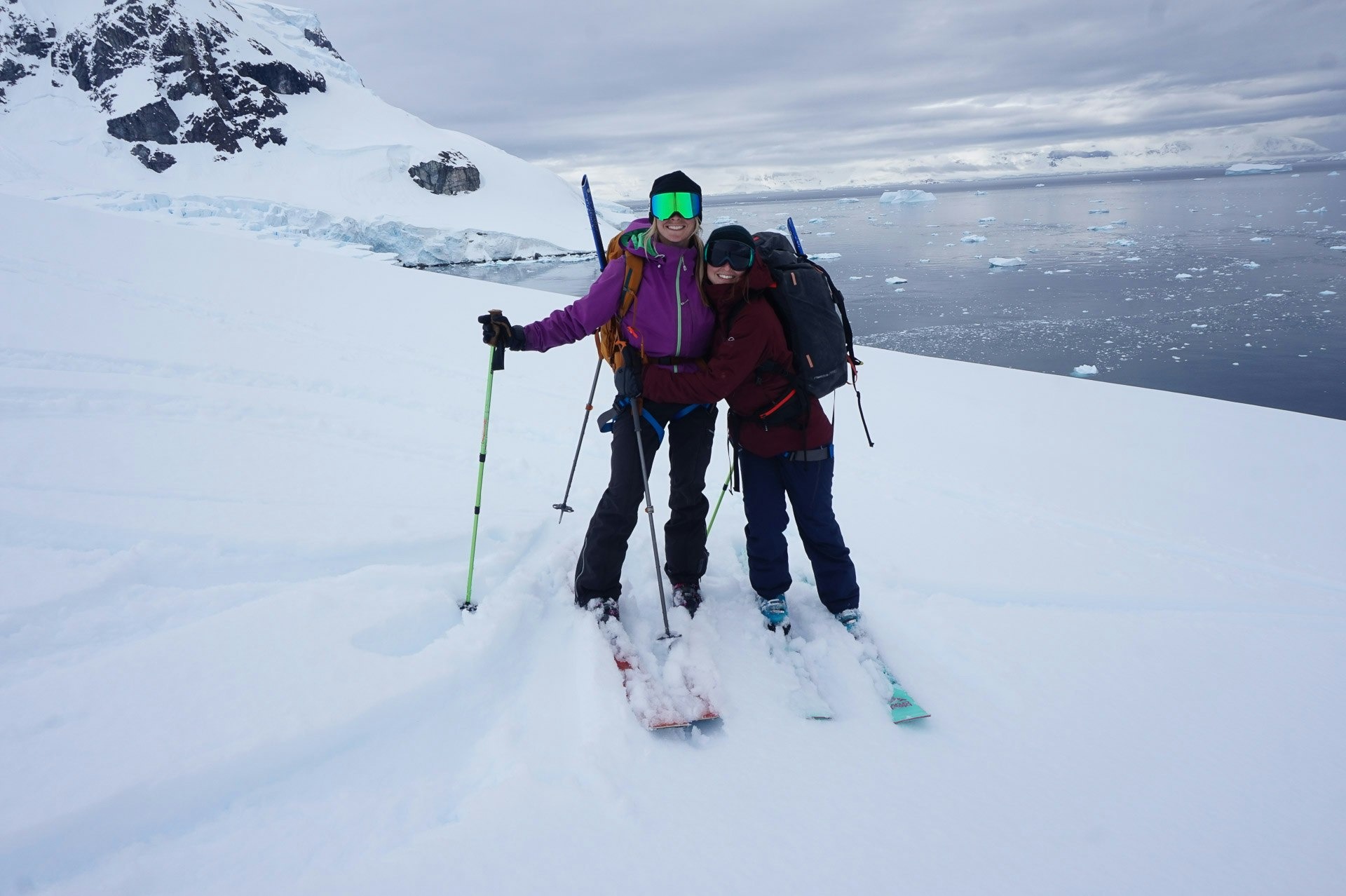
What Makes Antarctic Skiing and Riding So Different
Aurora’s guide team describes this as a kind of skiing and snowboarding experience you simply cannot replicate elsewhere, and that is not marketing fluff. The difference is the setting, the access, and the fact that the environment is not designed for you, you are adapting to it.
No Lifts, No Groomed Runs, Every Descent Is Earned
One of the clearest lines from Aurora’s alpine team is that there are no ski resorts, no lifts, and no groomed runs. That changes everything about how you approach the day. You are moving through wild terrain, making careful choices with your guides, and earning the descent through your own effort rather than a chairlift queue.
This also means the “reward” is not measured in the number of runs you get. It’s measured in one great line, the feel of the snow under your edges, and the kind of silence that you simply do not get in crowded alpine areas.
Wildlife and Terrain Sharing the Same Stage
Aurora’s team points to a detail that stops most travellers in their tracks: the idea that you can start and finish a tour near a penguin colony, with the chance of seeing humpback whales close to shore. That proximity to wildlife is a reminder that you are touring in a living ecosystem, not an empty mountain playground. It adds awe, but it also adds responsibility, because respectful behaviour and careful movement matter.
For travellers, this is where the experience becomes more than sport. It turns into a once-in-a-lifetime blend of adventure and nature, where your surroundings are as memorable as the descent itself.
Zodiac Access Changes the Whole Rhythm of a Touring Day
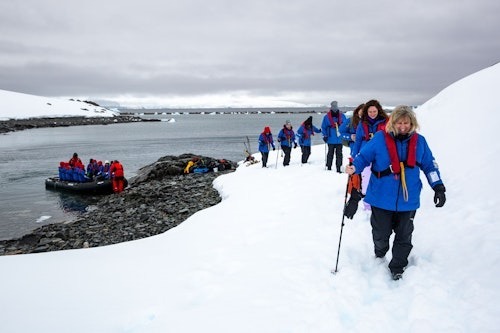
Zodiacs are not just transport in Antarctica, they are part of how the day is built. Guests use zodiacs to access terrain, which can mean changing plans quickly if wind, ice, or visibility shifts. It also means you need to be comfortable with expedition logistics, layering up, managing gear, and moving efficiently when the team says it’s time.
If you have only ever toured from a trailhead or resort boundary, zodiac access is a different kind of adventure. It creates a feeling of true remoteness, because you are travelling by water to reach the snow and then returning to the ship after a day that feels completely removed from normal life.
How Aurora Keeps the Experience Safe and Guest-Appropriate
Antarctica rewards humility, and a good operator builds that humility into the programme. Aurora’s approach is guide-led, condition-driven, and designed for people who can handle variable terrain and weather, with daily assessments and careful matching of guest ability to the day’s plan.
Daily Checks for Weather, Ice, and Safety
Aurora assesses the terrain daily for weather, ice conditions, and safety considerations, which is exactly how this should be run. In Antarctica, a plan that looked sensible yesterday can be wrong today, and the environment does not care about your holiday schedule. Good guiding means making conservative calls early and being willing to pivot without drama.
For guests, it’s worth embracing this mindset before you go. You are not buying a guaranteed “ski day” in the resort sense; you are joining an expedition where the best outcome is a safe, well-judged day that fits the conditions.
Matching Ability and Fitness to the Terrain
Aurora’s guides work with guests to ensure they are adequately prepared, matching abilities and fitness levels with the terrain. That matters because confidence on snow is only one piece of the puzzle; fatigue, cold management, and movement in bulky layers can change how capable you feel. A great day is one where the group’s pace is appropriate, and nobody is being pushed past their comfort zone.
This matching approach also protects the experience for everyone. When a group is well-balanced, you spend less time dealing with preventable issues and more time enjoying the environment and the run.
Preparation That Helps You Enjoy the Trip, Not Just Survive It
If you’re considering this style of expedition, preparation should be practical, not obsessive. The aim is to arrive with the fitness to move comfortably for a day, the skills to handle uneven snow, and the mindset to stay calm when plans change. To keep it simple, here are a few focus areas that tend to matter most:
- Cold-weather layering that you have tested before, so you know what keeps you comfortable while moving
- Strong legs and steady cardio, because “earned” descents often start with steady effort
- Comfort with variable snow, including wind-affected surfaces and changing visibility
- A willingness to listen and adapt, because the safest travellers in Antarctica are the most flexible ones
The best part is that this kind of preparation usually improves every part of your expedition, not just the touring days. You feel better on landings, you move more confidently in zodiacs, and you recover more easily between big days.
Who This Programme Is Really Designed For
Aurora is upfront that the programme is designed for those who are confident and used to variable conditions. That is not about gatekeeping; it is about setting expectations so guests choose the right experience and have a good time on it.
Confidence in Variable Conditions Is a Must
Variable conditions can mean wind, shifting visibility, harder snow, softer snow, and changes that happen fast. Confident participants are typically those who can maintain control when conditions are imperfect and can make sensible decisions when things do not feel “ideal.” That confidence usually comes from experience, not just enthusiasm.
If you are new to touring, the best question to ask yourself is whether you enjoy uncertainty on snow. Antarctica is not the place to discover that you only like groomed runs.
Fitness is more than cardio; it’s Function
Fitness for an Antarctic touring day is about function, balance, stability, and the ability to manage your body and gear in cold conditions. It includes getting in and out of zodiacs confidently, moving on uneven ground, and staying steady when layers and packs change how you move. Even if you are technically skilled, fatigue can affect judgment, which is why guides pay attention to fitness as well as ability.
The good news is that functional fitness is trainable. Many travellers build it through a mix of leg strength, hiking endurance, and steady cardio months before the trip.
A Strong Mindset Makes the Biggest Difference
The best guests on expedition programmes are rarely the loudest or most ambitious; they’re the ones who stay calm, communicate clearly, and accept guide decisions without taking them personally. In Antarctica, the “no” days prove the operator is being responsible, and the “yes” days feel better because you know they were earned and justified.
If you want to get the most from the experience, aim to show up as a team traveller. The environment is big, and the smartest way to enjoy it is together.
Fleet Growth and Why It Matters for Adventure Add-Ons
Aurora has also recently marked the arrival of its third vessel, Douglas Mawson, joining Greg Mortimer and Sylvia Earle. This matters because active programmes require strong operational foundations, the right ship platform, the right expedition team depth, and the ability to manage logistics without rushing.
Douglas Mawson Joins a Three-Ship Expedition Fleet
With Douglas Mawson now sailing alongside the other two ships, Aurora has more flexibility to meet demand and offer more departures. That helps explain how the line can increase voyages featuring the alpine activity while still keeping the expedition model intact. It also gives travellers more choice, which is valuable when planning for a season as far out as 2027 to 2028.
Aurora also marked a notable Sydney moment with the ship’s arrival late last year, with the christening described as a rare occasion for a brand-new cruise vessel in Australia. For travellers, it’s a reminder that even the most remote expeditions often have meaningful links to Sydney as a gateway city.
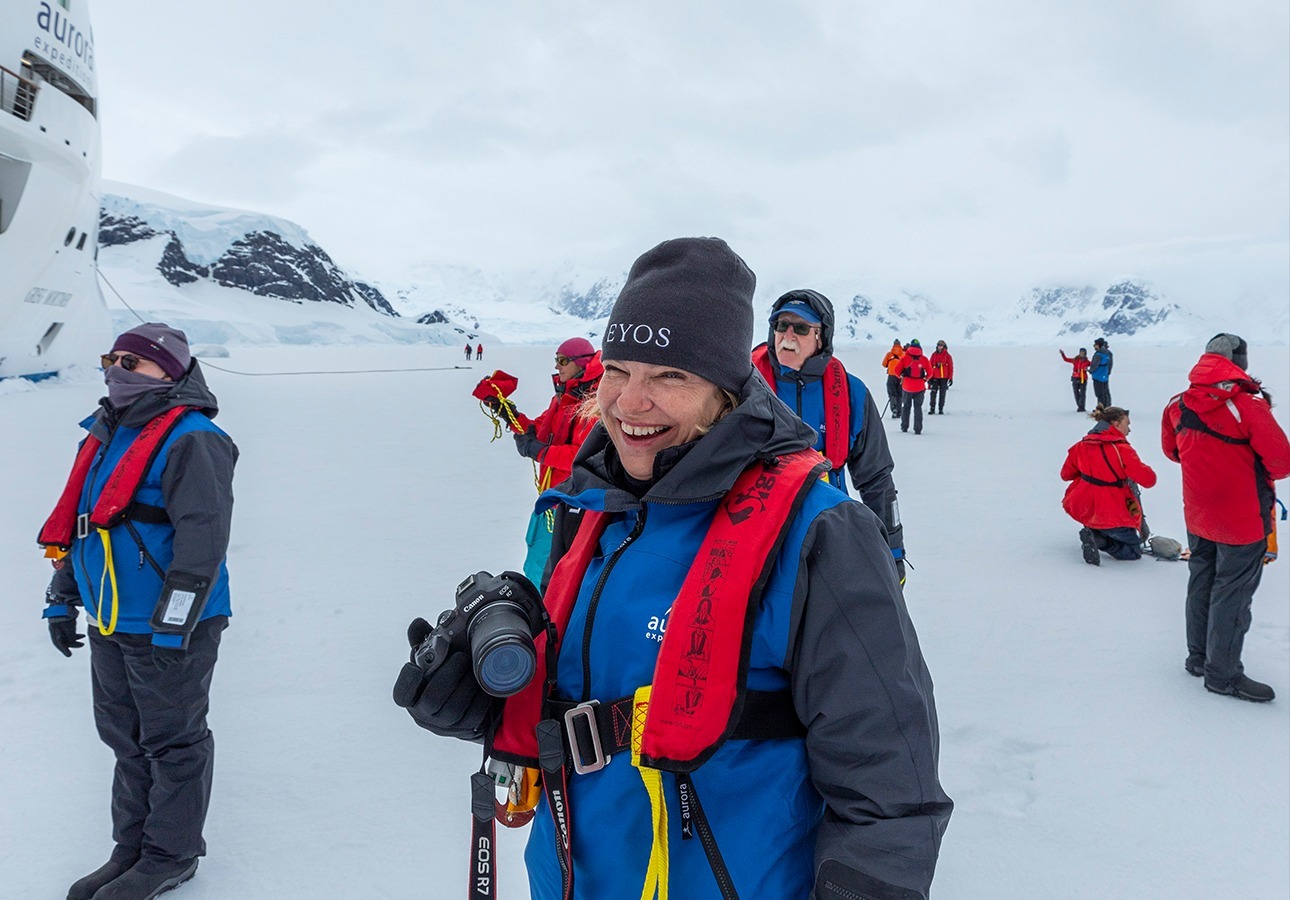
Why Small-Ship Expedition Operations Suit Touring Days
Expedition ships are built around flexibility, zodiacs, and a daily plan that can change without derailing the guest experience. That structure supports touring because touring is weather-led, and small-ship operations tend to be better at moving with the conditions. When the ship and team are designed for adaptability, active programmes can feel smoother and more considered.
It also means there’s often a strong culture of safety and environmental care onboard. In Antarctica, that culture is not optional; it is the foundation of doing the trip responsibly.
What to Watch For When the Full Programme Is Released
Because the full programme details are due later this year, the smart move now is to decide what matters most to you. Think about how many active days you want, how comfortable you are with variable conditions, and whether you want a broader mix of expedition activities alongside touring. When the details drop, you can then choose based on fit, not hype.
It can also help to plan your training timeline now. Even if you are already skilled, arriving in strong, steady condition makes the whole trip feel more enjoyable, especially on back-to-back active days.
If you want to start exploring Antarctica departures and compare expedition styles, S.W. Black Travel’s Cruise Finder is a handy place to browse options in one view:
Once you’ve shortlisted a few possibilities, Cruise Finder can also help you narrow down timing and trip flow, so your choice matches your experience level and the kind of Antarctic days you want.
Plan Your Antarctic Adventure With Clear, Expert Guidance
Aurora’s expansion for 2027 to 2028 is a strong signal that more travellers want an Antarctica trip that feels active, raw, and earned, not packaged. With zodiac access, daily assessments, and guide-led matching of ability and fitness, the structure is built to protect both the guest experience and the environment you’re visiting. The result is a rare kind of touring day, one where the scenery is bigger than you expected and the effort becomes part of the memory.
If this is the kind of expedition you’ve been waiting for, the best next step is to align the right sailing with your skills, your fitness timeline, and the stateroom style that suits a cold-weather journey. When you’re ready, you can talk with S.W. Black Travel to start planning, and we’ll help you map the practical details that make an ambitious trip feel straightforward, including the best way to approach the skiing and snowboarding program once the full 2027 to 2028 release is confirmed.

Comments